5.6 Microsoft Entra External Identities - B2B and B2C
In today’s interconnected world, businesses often need to work closely with partners, vendors, suppliers and other collaborators. We should devise a secure way to share the internal resources with the collaborators, which is where the Microsoft Entra External Identities for B2B or business to business comes into play.
This is intended for the external users, and they will be identified as external users. Meaning we don’t manage them and they are managed by their organization. but invited for collaboration.
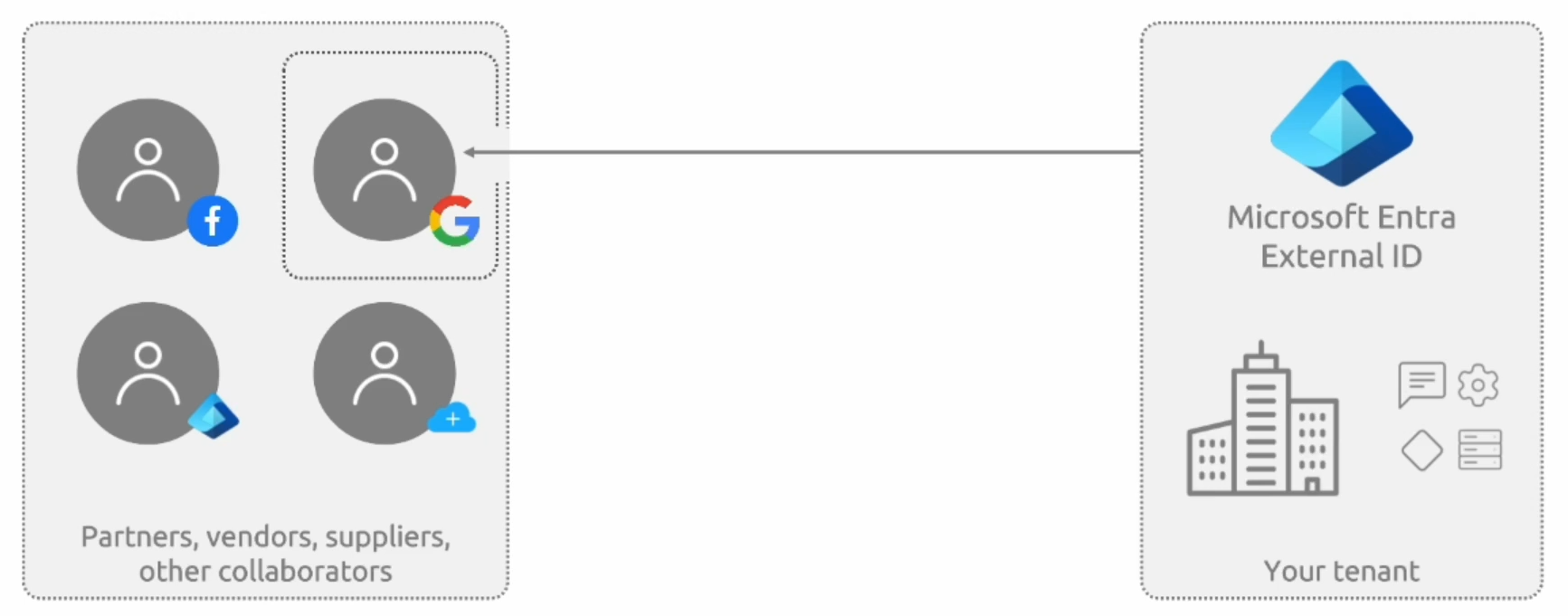
Key Features
- Cross-Organization collaboration, its like a guest pass.
- Self-service sign up
- Customizable user experience.
Benefits
- Enhanced security and compliance, we maintain control of our resources.
- Simplified management, this streamlines the process of managing the external entities in our network.
- Improved collaboration, secure and efficient collaboration.
Use Cases
- Collaborative project sharing, for virtual working
- External partner resource access
- Customer portal access
B2C - Business to Customer
This entirely deals with the ways the organizations secure the interaction between them and the customers.
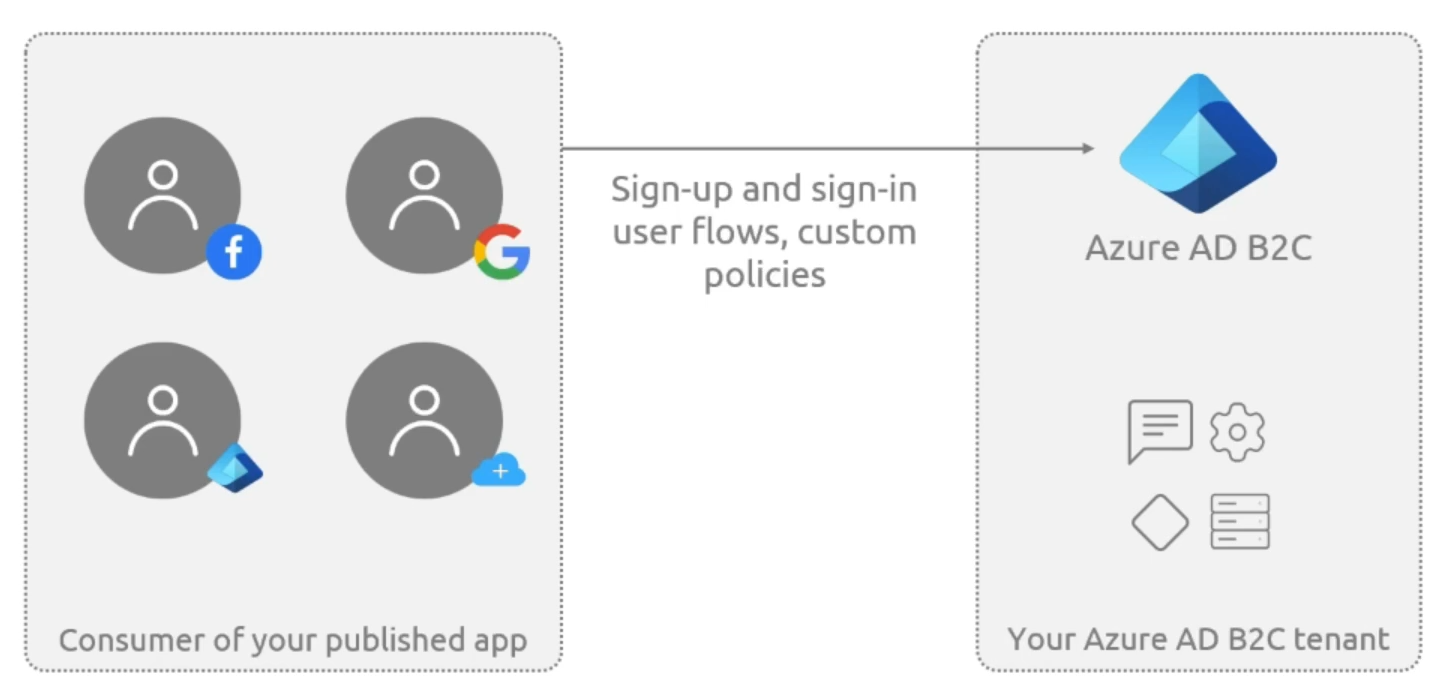
Key Features
- Customizable user journeys, provide the customers with various sign up and sign in methods.
- Social Identity Providers, This allows the customers to login with various social media accounts such as Facebook, LinkedIn, etc.
- Strong authentication, enables MFA for authentication.
Benefits
- Enhanced user experience, customers enjoy seamless login activity.
- Scalability, it’s capable of managing millions of customer identities and interactions.
- Security and compliance, B2C follows global standards.
Use Cases
- It’s best for consumer-facing applications such as e-commerce sites.
- It’s suitable for gaming, consumer apps, etc